Free Media News opens the morning with five briefs. Each line is the news. The full report sits on the story page.
Petrol is Rs 390.66 a litre from Friday, up Rs 3.26. Diesel is Rs 399.34, down Rs 1.01. OGRA’s sheet took effect at midnight.
Pakistan says air strikes in Kunar and Helmand killed 22 fighters. Kabul says nine civilians were killed, women and children among them, and three houses destroyed.
Trump says Iran may be linked to the Flydubai copilot who tried to crash a jet bound for Tel Aviv. If the link holds, he says Tehran will be hit very hard.
Islamabad expects the Kashmir Chowk underpass groundbreaking on 5 October. The Habib Construction Services bid is about Rs 1.45 billion. A diversion road is already being built.
Washington has told France and Germany to release diesel stocks or face a possible US export ban. The ask is about 120 million barrels over six months.
Science · Medicine
Scientists Win 2026 Nobel Prize for Controlling Brain Cells With Light
Three scientists have won the 2026 Nobel Prize in Physiology or Medicine for discoveries that transformed scientists’ ability to study and control the activity of individual nerve cells using light.
STOCKHOLM, 5 October 2026
Karl Deisseroth, Peter Hegemann and Georg Nagel were jointly awarded the prize for their discoveries concerning light gated ion channels and the development of optogenetics, a research technique that has become one of the most important tools in modern neuroscience.
Optogenetics allows researchers to make selected nerve cells sensitive to light. Scientists can then use precisely controlled light to activate or silence those cells, making it possible to observe how particular neurons and brain circuits influence movement, behaviour, memory and other biological functions.
The scientific journey behind the technique began with research into microorganisms that naturally respond to light. Peter Hegemann studied how algae react to illumination and helped uncover the role of light sensitive proteins known as channelrhodopsins. Georg Nagel contributed to demonstrating how these proteins could function as light controlled ion channels in cells.
Karl Deisseroth later helped turn these discoveries into a powerful neuroscience technique by developing ways to introduce the light sensitive proteins into selected neurons. Researchers could then use pulses of light to control the activity of specific nerve cells with remarkable precision.
This was a major advance because the brain contains billions of interconnected nerve cells. Traditional research methods often made it difficult to determine exactly which group of neurons was responsible for a particular behaviour or biological response.
Optogenetics changed that.
Instead of simply watching brain activity, scientists could begin directly testing what happens when specific neurons are switched on or off. This gave researchers a new way to investigate the relationship between individual cells, neural circuits and behaviour.
The Nobel Assembly at Karolinska Institutet said the discoveries opened major new possibilities for understanding how the nervous system functions. Optogenetics has since become widely used in neuroscience laboratories around the world.
Researchers have used the technique to study brain circuits involved in movement, memory, sleep, motivation, addiction and sensory processing. It has also contributed to research into neurological and psychiatric conditions including Parkinson’s disease, epilepsy, schizophrenia and Alzheimer’s disease.
Scientists are also investigating whether technologies inspired by optogenetics could eventually contribute to new treatments. Research is underway in areas including vision restoration and other neurological applications.
However, optogenetics should not be misunderstood as a treatment in which doctors simply shine light onto the human brain. Its greatest impact so far has been as a research tool that allows scientists to investigate the nervous system with a level of precision that was previously difficult to achieve.
The discovery also demonstrates how basic scientific research can lead to unexpected breakthroughs.
Research that began with questions about how simple algae sense and respond to light eventually contributed to a technology capable of controlling activity in individual nerve cells inside living brains.
The three laureates will share the 2026 Nobel Prize in Physiology or Medicine.
Their work has fundamentally changed the way researchers investigate the brain and has provided scientists with a powerful method for exploring some of the most complex questions in neuroscience.
From light sensitive proteins in microorganisms to controlling individual neurons, optogenetics has turned light into a scientific switch for exploring the brain.
Technology · Platforms
Elon Musk’s X Launches XChat, A Private Messaging Service
X is expanding beyond traditional social media with XChat, a new private messaging service designed to compete with established platforms such as WhatsApp, Telegram and Signal.
SAN FRANCISCO, 3 October 2026
Elon Musk’s X is expanding beyond traditional social media with XChat, a new private messaging service designed to compete with established platforms such as WhatsApp, Telegram and Signal.
XChat is connected directly to a user’s existing X account, which means people can start conversations without registering a separate phone number. This gives X users a way to move from public posts and replies into private communication while staying inside the same ecosystem.
The service brings together several features commonly found across major messaging applications. Users can send private messages, create group chats, share photos and files, use disappearing messages, and make audio and video calls.
X is also promoting XChat as a more privacy focused communication service. According to the platform, the messaging experience is designed without advertising or tracking, while encryption is intended to protect conversations between users.
One of the biggest differences from many traditional messaging apps is the account system. Instead of depending primarily on a mobile number, XChat uses an existing X identity. This could make the service particularly attractive to people who already use X regularly and do not want to share their personal phone number with every person they communicate with.
The launch also reflects Elon Musk’s wider plan to transform X into a broader digital platform rather than keeping it focused only on social networking. Messaging, payments, video, calling and other services have increasingly become part of that wider strategy.
However, XChat’s privacy and security claims are also receiving attention from cybersecurity researchers. Questions have been raised about how its encryption is implemented, what information may still be visible to the platform, and how its protections compare with messaging services that have established reputations for secure communication.
For users, this means XChat may offer convenient new communication features, but claims about privacy and encryption should still be considered carefully as independent security experts continue examining the technology.
The arrival of XChat puts X into more direct competition with some of the world’s biggest messaging platforms. Whether users will move their private conversations to XChat will depend not only on features, but also on trust, security, reliability and how well the service performs as its user base grows.
XChat is another major step in X’s attempt to evolve from a social media network into a wider communication platform where users can post publicly, message privately, share files and make calls through a single account.
Business · Energy
KOHINOOR Energy Signs MoU With Chinese Firm To Explore Battery Plant
Kohinoor Energy Limited and China’s Hebei Juhang Energy Technology Group have signed a non-binding memorandum of understanding to explore a joint venture for lithium-ion battery packs and battery energy storage systems in Pakistan.
LAHORE, October 2
Kohinoor Energy Limited and China’s Hebei Juhang Energy Technology Group have signed a non-binding memorandum of understanding to explore the possibility of establishing a joint venture in Pakistan for lithium-ion battery packs and battery energy storage systems.
The agreement was signed on 1 October 2026 and was disclosed by Kohinoor Energy to the Pakistan Stock Exchange as material information. Under the proposed arrangement, the two companies will evaluate opportunities for the assembly, manufacturing, marketing and sale of lithium-ion battery packs, battery energy storage systems, related products and associated electrical equipment in Pakistan.
The proposed project is expected to be considered in several phases. The initial phase could have an annual production capacity of approximately 50 to 100 MWh. If market demand and business performance support further investment, capacity could later increase to around 300 to 500 MWh and eventually reach approximately 700 to 1,000 MWh per year.
The scale of the later phases would therefore depend on how the market develops and whether the proposed business meets the commercial and regulatory conditions required by both companies.
For Kohinoor Energy, the proposal would represent a move beyond its existing electricity generation business and into battery assembly and energy storage technology. The company currently operates a 124 MW power plant in Lahore and sells the electricity generated from the facility to the Water and Power Development Authority.
The potential venture also comes at a time when battery storage is becoming increasingly important in Pakistan. Growing adoption of solar power by homes, businesses and industrial users has increased interest in systems that can store electricity for use when solar generation is unavailable or when grid electricity is more expensive.
Recent industry reporting indicates that Pakistan’s lithium-ion battery market has expanded rapidly. Lithium battery imports reportedly reached a monthly record of about 88 million dollars in July 2026, while projections cited by industry reporting suggest lithium-ion battery pack imports could reach approximately 8.75 GWh by 2030. These figures indicate rising demand, although future market growth will depend on electricity prices, solar adoption, regulation and consumer demand.
Hebei Juhang Energy Technology Group has also previously shown interest in Pakistan’s clean energy and manufacturing sector. In June 2026, the Chinese company entered another cooperation arrangement in Pakistan involving advanced lithium-ion batteries, energy storage systems and electric vehicle charging infrastructure.
If the Kohinoor Energy proposal proceeds to a final investment agreement, local assembly or manufacturing could potentially reduce dependence on fully imported finished battery systems and contribute to the development of domestic energy storage capabilities. However, the companies have not yet announced a factory location, investment amount, construction schedule, financing structure or expected start of production.
The most important point is that the current agreement remains preliminary.
No battery plant has been constructed and no final joint venture agreement has been signed. Kohinoor Energy has stated that the transactions being considered remain subject to further evaluation, due diligence, applicable approvals and the signing of definitive agreements. The company has also said that it will inform the Pakistan Stock Exchange of any material developments in accordance with applicable requirements.
The MoU therefore represents an initial step toward a possible Pakistan-China battery manufacturing partnership rather than confirmation that the proposed plant will definitely be established.
Further developments to watch will include the signing of a final joint venture agreement, confirmation of a manufacturing site, investment details, regulatory approvals, production timelines and the final capacity selected for the first phase.
Pakistan · Diplomacy
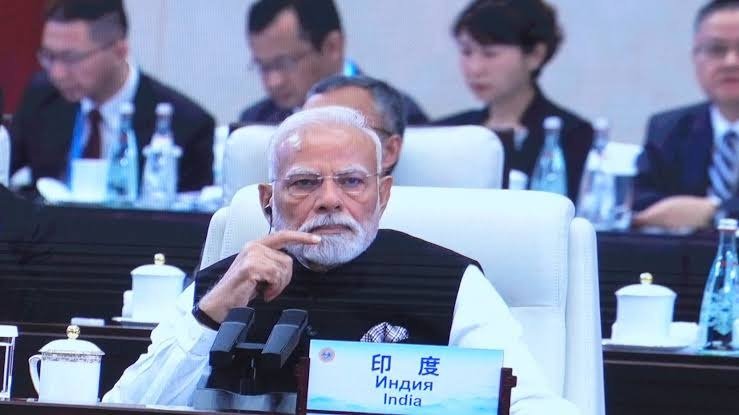
Will Modi Travel to Pakistan for the SCO Summit? Delhi Keeps Options Open
India’s attendance at a Shanghai Cooperation Organisation meeting in Islamabad has revived speculation, but no decision has been announced.
ISLAMABAD, October 2
India’s participation in a Shanghai Cooperation Organisation meeting in Islamabad has prompted speculation over whether Prime Minister Narendra Modi will attend the bloc’s next heads-of-state summit in Pakistan.
India has announced no decision. In a report titled “Government Backs SCO Connectivity, but PM’s Pakistan Visit Uncertain,” The Times of India said on Thursday that Modi’s attendance at six of the seven in-person SCO summits since India became a full member did not guarantee that he would travel to Pakistan.
Pakistan chairs the SCO for 2026–27 and will host the leaders’ summit in Islamabad. Prime Minister Shehbaz Sharif is expected to invite the leaders of all member countries, including Modi.
India was represented at the September 28–30 meeting by Alok Dimri, an additional secretary at the Ministry of External Affairs and India’s National Coordinator for the SCO.
The meeting reviewed Pakistan’s chairmanship calendar and preparations for upcoming ministerial meetings and the summit. Dimri said the agenda centred on regional connectivity, trade, transit and shared prosperity. He said the year-long programme would culminate in the Islamabad summit.
No confrontation between the delegations was reported. Dimri shook hands warmly with Deputy Prime Minister and Foreign Minister Ishaq Dar at the Foreign Office, a gesture that drew attention after the two countries traded sharp words at the United Nations General Assembly.
On his first visit to Pakistan, Dimri said he was happy to be in Islamabad and would like to visit Lahore, Faisalabad and Sialkot. The delegation also toured the Pakistan National Council of the Arts and Naseer Bunda Hockey Stadium, where SCO representatives were briefed on a hockey tournament planned during Pakistan’s chairmanship.
Indian officials say a decision on Modi’s participation will take into account the state of relations with Pakistan and New Delhi’s concerns over cross-border terrorism. Pakistan denies supporting terrorism.
The meeting was multilateral, and no bilateral talks between Pakistan and India were announced.
Pakistan · Energy
Petrol Rises by Rs3.26 to Rs390.66 per Litre
High-speed diesel has been reduced by Rs1.01 to Rs399.34 per litre. The revised rates are applicable for October 2.
ISLAMABAD, October 2
The federal government has increased the price of petrol by Rs3.26 per litre, taking the new rate to Rs390.66, while reducing the price of high-speed diesel by Rs1.01 per litre.
Petrol previously cost Rs387.40 per litre. The new price of high-speed diesel is Rs399.34, down from Rs400.35 per litre.
According to the Petroleum Division, the Oil and Gas Regulatory Authority revised the ex-depot prices under the petroleum-pricing mechanism notified by the federal government.
The division said the adjustment was required because of changes in international Platts rates, premiums and other associated costs.
Current price calculations put government taxes and duties at Rs114 per litre on petrol and Rs100 per litre on high-speed diesel.
The revised rates are applicable for October 2 under the government’s daily petroleum-pricing mechanism.
World
Apartment landlords sit on a debt problem that has not yet turned the corner
New York · Markets
The Education
Missions week: the appointments, the trade notes, the UNGA corridor
Brief on this site · Full dispatch on The Education
Sport
A flag promised in the ring as Mundine takes the Newcastle bout
World sport
Pakistan Numbers 5 October 2026
Currency
USD Rs 277.49
Interbank rate · 5 October 2026
The Pakistani Rupee remained broadly stable in interbank trading today, with the US dollar trading around Rs 277.49. We track the interbank exchange rate rather than open-market kerb rates.
NEWS · ANALYSIS · INVESTIGATIONS
Beyond the headline
Daily context, document-led reporting and a direct line to our newsroom.
01 WHY IT MATTERS · DAILY ANALYSIS
What the Islamabad march means for the city
The Associated Press reports that PTI supporters have begun a march towards Islamabad after talks with the government failed. Authorities are preparing security measures around the capital.
Why it matters: Road closures can disrupt commuters, trade and access to public services. The scale of disruption will depend on the routes used and the security measures in place.
SOURCE Associated Press · 5 October 2026
AFTER CLICK Opens the full analysis of this published news story, with context, public impact and linked sources.
02 THE FILE · INVESTIGATIONS
Documents and Answers Behind the Stories That Matter
PAKISTAN’S PUBLIC DEBT: RS86.7 TRILLION
The Finance Ministry’s Annual Borrowing Plan records public debt of Rs86.7 trillion at the end of June 2026 and gross financing needs of Rs28.65 trillion for FY27.
SOURCE: Finance Ministry · Borrowing Plan FY27
AFTER CLICK Opens the investigations list. This file links to the underlying document and explains what the figures show.
03 ASK FREE MEDIA NEWS
Have a question or a document? Send it to our newsroom.
Selected questions and documents may be reviewed by our newsroom for possible reporting or a public response.
AFTER CLICK Opens the Ask Free Media News page, where readers can submit a question and an optional document.
Pakistan’s Online Real Estate Newspaper
Real Estate News and Market Updates
A specialised real estate news platform covering property, housing, land, construction, development authorities, and relevant laws and regulations.


.jpeg)